

Yesterday, one of the very best articles I’ve ever read on how the international political economy actually works came out. It’s Gideon Lewis-Kraus’s New Yorker piece on semiconductor supply chains. Even if you never thought you wanted to read a piece on how chips are made, you will want to read this one. The writing glows. As I write, there doesn’t seem to be a paywall but I suspect that that will change soon. So click through.
Gideon says that the semiconductor supply chain is the greatest collective achievement of our era, a series of interconnected technological miracles of coordination. This description of how TSMC’s Extreme Ultra Violet (EUV) lithography machines work give some sense of one such miracle:
Tiny droplets of the molten tin are fired out of a cannon into a vacuum chamber, where they are shot—sixty thousand times a second—by unerring lasers. When the tin fog is ignited, the explosion produces a plasma fifty times hotter than the surface of the sun. The process, in other words, commences with the industrial production of miniature supernovas. These supernovas emit EUV that must be collected by Zeiss’s mirrors, which cannot function if their surface is marred by even a nanometre of tin debris. The only way to keep the mirrors pristine is to pump a continuous hurricane of hydrogen gas into the supernova’s blast radius. The gathered light ricochets through a hall of mirrors before it is bounced onto the blueprint of the chip. Making this happen a single time took decades of research. The profitability of ASML’s customers relies on it happening near-flawlessly twenty-four hours a day. Recurrent shutdowns, it’s not much of an exaggeration to say, would derail the global economy.
The last sentence also gives some sense of what is at stake in current global disputes over technology. No other company than ASML can build these extraordinary machines. That makes them a chokepoint in the global semiconductor supply chain, and the US has noticed. US pressure on Europe means that ASML is not allowed to export EUV lithography machines to China, which hence has trouble catching up with the US on AI. Now, Congress is advancing the MATCH Act, which aims to prevent ASML and the Japanese company Tokyo Electron from selling less advanced Deep Ultra Violet machines to China too, leading to possible retaliation. As Gideon describes it:
The U.S. government has prohibited the sale of ASML’s flagship product in China, but it continues to export an earlier generation of its machines. The Trump Administration has expressed a strong preference for ASML to stop doing even this much. If the company chooses to obey, the Chinese might retaliate with the denial of crucial rare-earth metals.
Europe does not like being caught in the middle. In one recent scenario, European researchers ran a thought experiment in which the Pentagon ultimately identifies the loss of control over ASML’s machines as “a threat comparable to the proliferation of nuclear weapons.” Washington might then try to impose a joint-governance structure that would effectively nationalize a foreign company. Over dinner, I asked Benschop, the ASML vice-president, about the company’s status as a “choke point.” He said, “When I learned that word, I thought, I don’t want to be choked.”
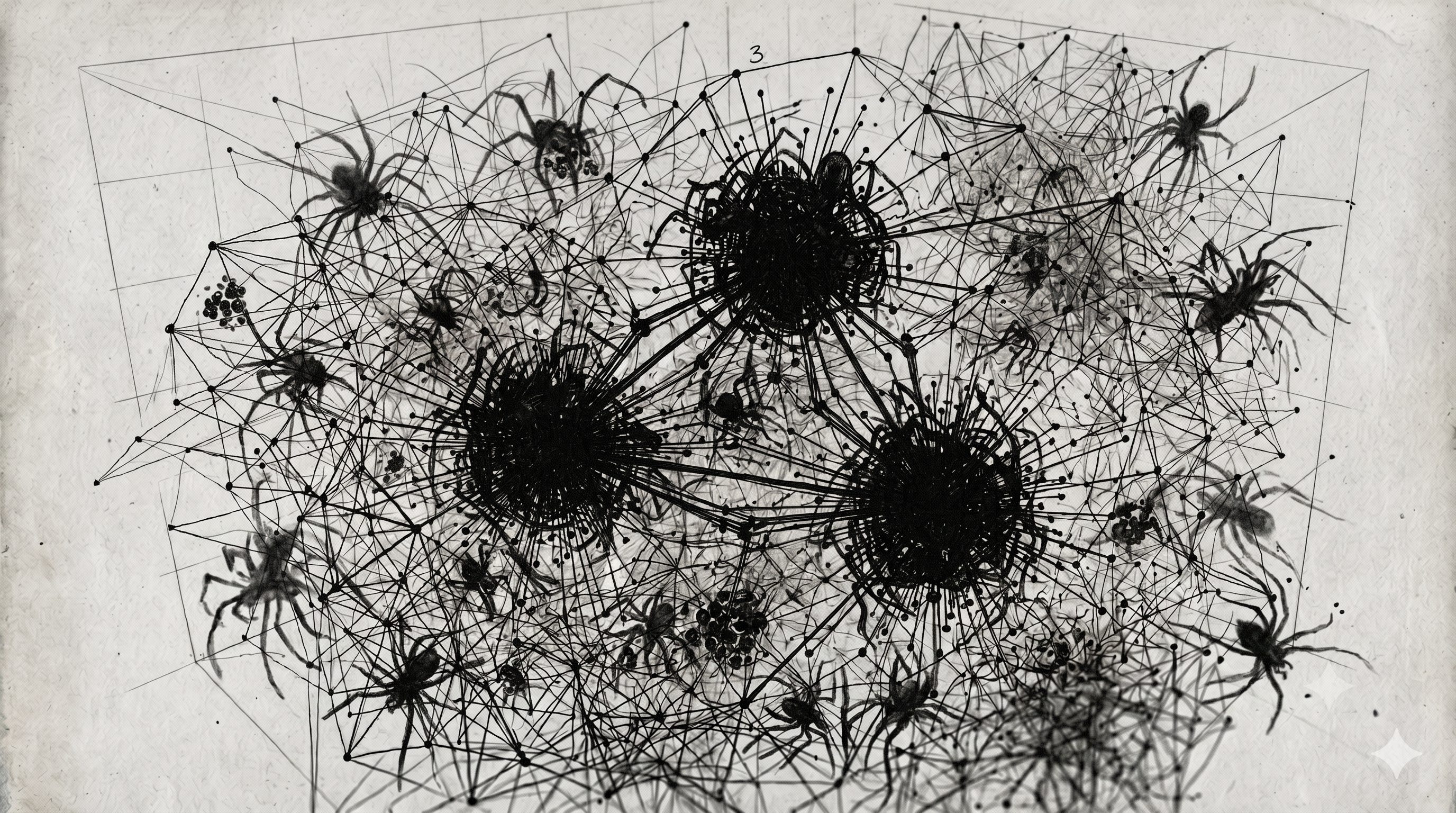
And that is a good lead-up to another piece that came out yesterday, written by Abraham Newman, Yeling Tan and myself. It’s in the new issue of Foreign Affairs: here’s a link that will sneak you underneath the paywall. From the perspective of the US government, chained microscopic supernovas, with light bounced through a maze of mirrors are interesting only insofar as it is currently impossible for other companies, in other jurisdictions, to make their own little starbursts. That is why ASML’s EUV machines are a chokepoint. ASML vice-presidents may not enjoy having America’s hands around their throat, but they appear to have little choice. We live in a world where all that governments seem capable of seeing are necks that they should either grasp and wring themselves, or encase in gorgets lest they be wrung by adversaries. So how did we end up here?
*******
Abe, Yeling and I describe how different things are than they were just a decade ago. Back then, all that most governments and businesses could see were the efficiencies of global supply chains and the marvels of interdependence. This report, published by the Semiconductor Industry Association, arguing that “a globally interdependent industry that pools the best each participant has to offer provides the best path to the future” is poignant, to the extent that industry puff-reports are capable of being poignant.
Now, global interdependence is threat rather than promise. What we call the “chokepoint view” predominates: a vision of the world as an interconnected system across which a grand strategic game is being played, in which great powers interests lie in ensuring that they control as many chokepoints as possible, while denying them to their adversaries.
The chokepoint view is unsurprisingly compatible with the Trump administration’s understanding of the global economy as a system “that is governed by strength, that is governed by force, that is governed by power.” But it also worked quite nicely for the Biden administration, which often sought to deploy chokepoints for good, and sometimes seemed to have difficulty realizing that others might be unconvinced of their legitimacy. And it fits with Xi’s worldview too - providing possible means to protect China against foreign economic coercion, while positioning China to deploy such coercion at scale against other countries to achieve its interests.
The one major economic power that continues to have problems with chokepoints is the European Union. It is still attached to old way of doing things. More immediately, its particular blend of national and supranational competences hampers it from building up chokepoint power.
The problem, then, is that powers look at this world of chokepoints in terms of what it means for their own individual power position. From each power’s particular perspective, it might seem that chokepoint-maxxing (while minning your adversaries’ capabilities), is the best way forward. But individual strategies can have some highly unfortunate collective dynamics, leading to what David Bulman and Matt Ferchen have independently dubbed ‘the economic security dilemma.’
As the late Robert Jervis argued decades ago, each power’s individual efforts to make itself safer may tighten a collective trap in which all of them end up worse off. So too for efforts to constrict technology supply chains, financial networks and information flows. As we put it:
the chokepoint view has its own deadly blind spot. It is leading policymakers to focus on capabilities rather than strategy—to fixate on what leverage they have, and what leverage others have over them, rather than considering what happens when many countries build up their chokepoint power all at once.
The result is a familiar but dangerous dynamic: the security dilemma, in which one country’s efforts to secure itself make others feel threatened and respond in kind, leaving everyone less safe. The more that countries strengthen their control over chokepoints or protect themselves from coercion, the more they can make rivals feel that their own economic security has been undermined and provoke retaliation.
There is evidence that this is already happening. As Yeling, Abe and I discuss in a previous academic article with Mark Dallas, there is excellent evidence that China’s rapid accumulation of chokepoint power was driven by Chinese leaders’ belief that the US could use global networks to threaten its vital interests, while they were completely incapable of responding. The institutions that China has developed over the last few years, allowing it to threaten other countries’ access to rare earths far more systematically than ever before, bear a remarkable resemblance to US institutions and authorities. That is not a coincidence.
Power maneuvering over chokepoints doesn’t simply corrode the global relationships that make miracles like the semiconductor supply chain possible. It increases the risk of broader confrontation. Right now, the US and China are in a stalemate, where neither particularly wants to move, but each has strong reasons to distrust the other, and each can easily compound the other’s distrust by making a mistake, perhaps leading to escalation.
Officials who dream of an optimized form of chokepoint warfare in which they can fire an economic sniper rifle at judiciously selected targets regularly discover they are wielding a blunderbuss whose pellets fly in all directions—and the collateral damage only increases the risk of retaliatory spirals. The more some countries move to control key chokepoints, the more others will worry about how those chokepoints may be weaponized and seek to leverage their own. The result is a world bristling with chokepoints and defenses in which every power still feels completely insecure.
Semiconductor supply chains are a genuine miracle of coordination, but of a kind that is increasingly difficult to maintain in a world where everyone fears what everyone else might do to them. And we will be very lucky if losing such miracles is the worst that happena. Go read!
Thank you for laying this out so clearly.
It made me think of 1951, when France and Germany took the chokepoints of their age, coal and steel, and put them under joint governance. It wasn’t a defensive arrangement. It was a positive project: make war between them materially impossible and build something together instead.
Today every major power seems to have a chokepoint strategy, and none a project like that.
What worries me most is AI. The White House’s 2025 AI plan calls “unquestioned and unchallenged global technological dominance” a national security imperative.
Peter Thiel taught a generation of founders that “competition is for losers” and that “monopoly is the condition of every successful business.” In search or payments, you can debate it. But that logic has now moved from companies to states, and it has been aimed at the most powerful general-purpose technology in history.
The difference is what happens to the loser. A company that loses a market closes or gets bought. A state that fears losing a race for power has another option: force.
I think AI needs coordination on shared principles, not a race to dominate. I wrote about this in my first essay: https://thinkuphill.substack.com/p/we-didnt-just-lose-the-peace-we-lost
If chokepoints only buy each power more insecurity, what do you think it would take to start talking about shared principles again?
"As the late Robert Jervis argued decades ago, each power’s individual efforts to make itself safer may tighten a collective trap in which all of them end up worse off."
On Saturday, I chased down the source of an intermittent misfire on one cylinder of my 54-year-old Triumph motorcycle. It was a cold solder connection of the primary lead from the right-side set of points to its coil. I cut off the offending terminal, stripped and thoroughly cleaned the 18 gauge lead, and re-soldered and crimped the terminal shank. No more misfire. 50 mpg motorcycle back in daily service. Try that with ECU boards controlling the average Luxe-mobile.
My point here is that this ever-more hyper-complex pile of 'systems' leaves us ever more vulnerable to the skeevier operators, eager to capitalize on choke points that they can create in the name of 'efficiency', or hijack like literal pirates in the narrow points of trade.
No thanks. I hope to put my 52-year old Swedish wagon back into analog service this year, too.
Why are we painting ourselves into this corner? That's the question.
Really insightful piece here, Mr. Farrell. Thank you.
Tim Long, Just Up the Hill from Lock 15